Joy Denis, DO, MOST. Osteopath & Yoga Teacher


Osteopathy for Babies, Toddlers and Children
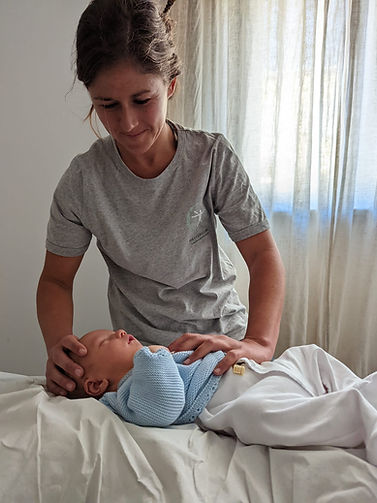


“It is a common belief that babies and children should have no stresses or strains in their bodies, because they are 'so young'. The reality is very different. Birth is one of the most stressful events of our lives. The baby is subjected to enormous forces, as the uterus pushes to expel the baby against the natural resistance of the birth canal. The baby has to turn and twist as it squeezes through the bony pelvis, on its short but highly stimulating and potentially stressful journey.
The baby's head has the remarkable ability to absorb these stresses. In order to reduce the size of the head, the soft bones overlap, bend and warp as the baby descends. The baby's chin is normally well tucked down towards its chest to reduce the presenting diameter of the head.
Many babies are born with odd shaped heads as a result. In the first few days, the head can usually be seen to gradually lose the extreme moulded shape, as the baby suckles, cries and yawns. However, this unmoulding process is often incomplete, especially if the birth has been difficult or was assisted with forceps or ventouse. As a result, the baby may have to live with some very uncomfortable stresses within its head and body.
Some babies cope extremely well with even quite severe retained moulding and compression, and are contented and happy. For others it is a different story. Osteopaths have some observations about how these retained compressions and stresses might affect the baby.
The baby may be uncomfortable, with a constant feeling of pressure in the structures of the head. This may be made worse by the extra pressure on the head when lying down.
Osteopaths consider that the nerves to the lips, cheeks and tongue can be affected by birth compressions. These nerves exit the base of the skull, and in the baby this area is not as well protected as it is in the adult. Baby needs these nerves and muscles to be working well in order to latch on and suckle comfortably and efficiently.
The tube to the stomach, the oesophagus, passes through a sheet of muscle under the ribs called the diaphragm. Stress from a difficult or fast birth can cause tension in the diaphragm, trapping wind. If the diaphragm is pulled out of shape around the oesophagus, it can compromise the ability of the stomach to retain its contents. Any strain through the umbilical cord, for instance if the cord was around the baby's neck, can add to strains in the abdomen.
Stress in pregnancy and during birth contribute to the general level of tension of the baby, and can keep the baby's nervous system in a persistently alert state. This can occur with either a difficult, or a very quick birth- the baby may find it difficult to relax fully and may have difficulty sleeping.
There is a theory that if the baby is in a persistently alert state, it's digestion can work too quickly. Milk may exit the stomach before it has had a chance to digest, and the partially digested milk enters the intestine where it may ferment and produce wind which can be uncomfortable for the baby.
There is now much medical evidence that stress during pregnancy and difficult birth can lead to problems later on.
Physical compressions may also affect function. Osteopaths consider that the structure of the head and body has a profound affect on their functioning. Unresolved birth compressions around the base of the skull and the ears can compromise drainage of the Eustachian (Auditory) Tube and leave the ears more vulnerable to recurrent infections and glue ear.
These are just a few examples of how osteopaths see the structure of the head and body affecting function.
Cranial osteopathic treatment
Osteopathic treatment using the cranial approach is gentle, safe and effective for babies and children. Very specific, skilled, light pressure is applied where necessary to assist the natural ability of the body to release stresses and tensions.
Could there be any adverse reactions?
Reactions to treatment are variable, often the baby or child is very relaxed afterwards and sleeps well. Others have a burst of energy after treatment, usually followed by a good nights sleep.
Occasionally children are unsettled after treatment. This is a temporary situation, and usually clears within 24-48 hours.
Osteopaths will always ensure that patients and their babies and children seek appropriate medical advice and treatment alongside any osteopathic treatment, and will refer patients back to their GP if a problem is not suitable for osteopathic treatment.” (Sutherland Society, 2014)
Why should babies beneficiate from
Cranial Osteopathy ?
Pediatric Osteopathy
Frequently Asked Questions (FAQ)
What is pediatric osteopathy?
Pediatric osteopathy is a gentle, manual therapy adapted specifically for babies, toddlers, and children. It focuses on restoring balance and mobility in the body to support healthy growth, comfort, and overall well-being using soft, non-invasive techniques.
Is osteopathy safe for babies and children?
Yes. Pediatric osteopathy is safe when performed by a qualified and trained osteopath. Techniques are very gentle and adapted to each child’s age, size, and development. Treatments always respect the child’s comfort and safety.
At what age can a baby see an osteopath?
Babies can be seen by an osteopath from birth. Many parents consult an osteopath within the first weeks of life, especially after a difficult or assisted birth, cesarean section, or if the baby shows signs of discomfort.
Why would a baby need osteopathy?
Osteopathy can help babies with:
-
Colic and excessive crying
-
Reflux and digestive discomfort
-
Feeding or latching difficulties
-
Sleeping problems
-
Torticollis or limited neck movement
-
Flat head syndrome (plagiocephaly)
-
Tension following birth
Can osteopathy help with colic and reflux?
Yes. Osteopathy can help reduce tension affecting the digestive system and nervous system, which may improve symptoms of colic, reflux, gas, and constipation. Osteopathy supports the body’s natural regulation but does not replace medical care.
How does an osteopathy session for a child work?
An osteopathy session begins with a discussion about your child’s medical history, birth, and current concerns. The treatment involves gentle hands-on techniques, often while the child remains clothed. Sessions are adapted to the child’s comfort and may include play or breaks.
How many osteopathy sessions does my child need?
The number of sessions depends on the child’s age, condition, and individual response. Some issues improve after one or two sessions, while others may require follow-up visits. Joy will discuss a personalized care plan with you.
Can osteopathy help with posture and growing pains?
Yes. Osteopathy can support children with:
-
Poor posture
-
Muscle or joint tension
-
Growing pains
-
Sports-related strains
-
Spinal mobility during growth
It helps improve comfort, movement, and balance as children grow.
Does pediatric osteopathy replace medical treatment?
No. Osteopathy is a complementary therapy and does not replace medical diagnosis or treatment. Osteopaths often work alongside pediatricians, physiotherapists, and other healthcare professionals when needed.
Should I bring anything to my child’s appointment?
For babies, bring their health record, feeding items, and anything that helps them feel comfortable. For toddlers and children, comfortable clothing is recommended. You will stay with your child throughout the session.
When should I consult a pediatric osteopath?
You may consider pediatric osteopathy if your child shows signs of discomfort, developmental challenges, recurring tension, or after a difficult birth, frequent falls, or sports activities. Osteopathy can also be used preventively to support overall well-being, support and improve the immune system.